Introduction
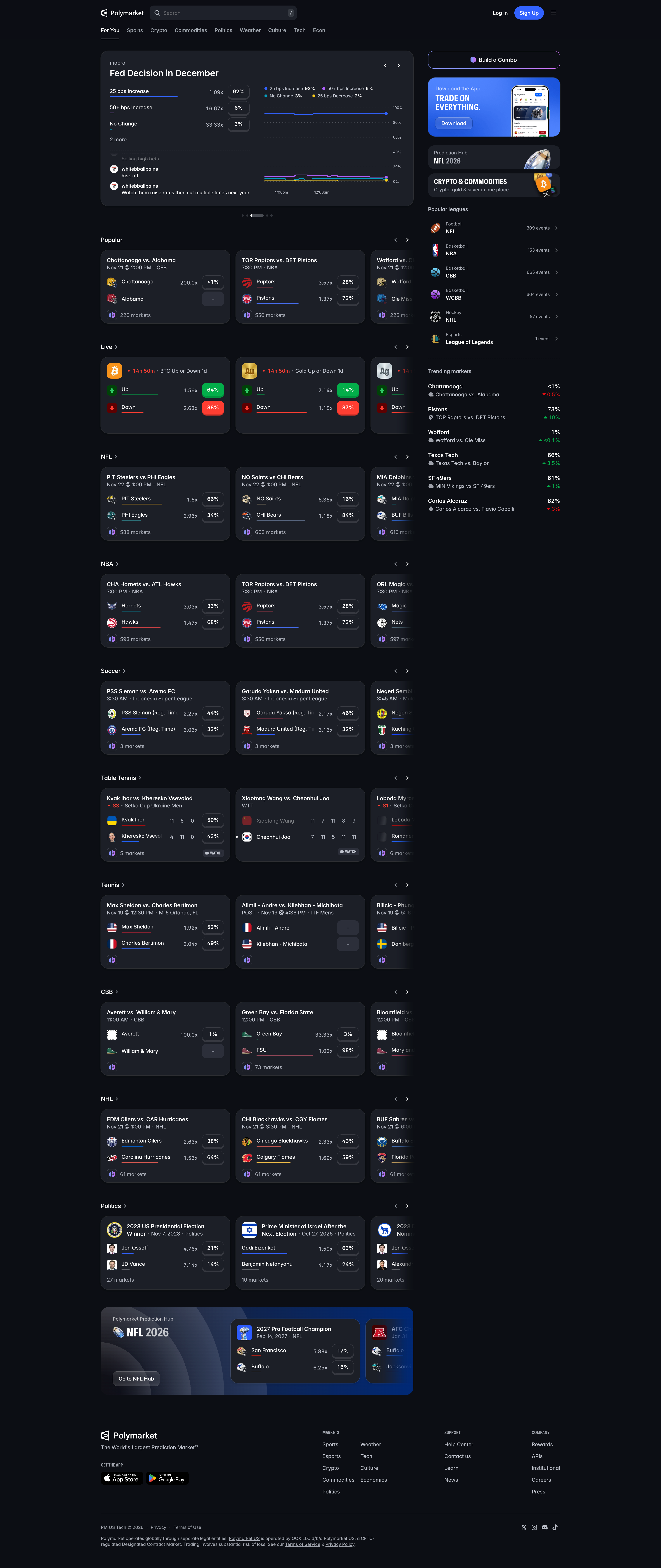
The financial and digital technology industries are constantly evolving, creating new ways for people to understand global events and participate in emerging markets. One platform that has attracted considerable attention is Polymarket, a prediction market platform that allows participants to trade contracts based on the possible outcomes of future events.Unlike traditional financial markets, where people generally trade stocks, bonds, commodities, or currencies, prediction markets focus on questions about real-world events. These questions may involve politics, economics, sports, technology, entertainment, and international developments. Participants buy and sell contracts representing different possible outcomes, while market prices provide an indication of how likely traders believe those outcomes are.Polymarket has become an important example of how technology, financial markets, and collective forecasting can come together. By combining event-based contracts with market-driven pricing, the platform offers a different approach to understanding public expectations about the future.This article explores what Polymarket is, how it operates, its main features, the role of blockchain technology, regulatory considerations, and the potential benefits and risks associated with prediction markets.What Is Polymarket?Polymarket is an online prediction market platform where participants trade contracts connected to the outcomes of future events. Instead of purchasing ownership in a company or investing directly in a traditional asset, users take positions on whether a particular event will happen.For example, a market might ask whether a specific political candidate will win an election, whether inflation will reach a particular level, or whether a sporting team will win a championship.Each market has defined possible outcomes and published resolution criteria. Participants can purchase contracts based on their expectations about those outcomes.In a basic Yes-or-No market, a contract generally pays $1 if the outcome occurs and $0 if it does not, subject to the market's specific rules.The central idea behind Polymarket is that market prices can reflect the combined expectations of many participants. People with different information, opinions, research, and forecasting methods interact through the platform, creating prices that can be interpreted as market-implied probabilities.Polymarket operates separate international and United States services, which have different operating structures, eligibility requirements, and regulatory frameworks.How Does Polymarket Work?Polymarket uses an event-based trading model. The platform lists markets around specific questions, and participants trade contracts representing possible answers.The process can be understood through several stages.1. Market CreationA market begins with a clearly defined question about a future event. Polymarket publishes the question, possible outcomes, closing conditions, and resolution criteria.For example, a market could ask:"Will a particular economic indicator increase during the next quarter?"The market must include rules explaining how the final outcome will be determined. These rules are important because they establish the conditions under which contracts are settled.2. Buying and Selling ContractsParticipants can purchase Yes or No contracts depending on their expectations.If someone believes an event is likely to happen, they may purchase Yes contracts. If they believe it is unlikely, they may purchase No contracts.Trading takes place between market participants rather than against the platform as a traditional betting house.The available prices depend on market demand, supply, liquidity, and the willingness of other participants to trade.3. Understanding Market PricesOne of the most recognizable features of Polymarket is its probability-based pricing system.For example, if a Yes contract is trading at $0.70, the price can be interpreted as approximately a 70% market-implied probability.Similarly, a contract trading at $0.25 represents an implied probability of approximately 25%.These prices are not guarantees or scientifically established probabilities. They reflect the market's current pricing and may change as new information becomes available.4. Market ResolutionOnce the event has occurred or the market reaches its specified resolution point, the outcome is determined according to the published rules.Winning contracts receive the applicable payout, while losing contracts receive no payout in a standard binary market.Understanding the resolution criteria is essential because even seemingly straightforward questions can involve complicated definitions, deadlines, or exceptions.Major Categories of PolymarketPolymarket covers a wide range of subjects, allowing participants to follow developments across different industries and areas of public interest.Politics and ElectionsPolitical markets allow participants to express expectations about elections, political leadership, legislative developments, and government decisions.These markets can attract considerable attention during election periods because participants continuously evaluate polling information, political developments, public opinion, and campaign activity.Political prediction markets also provide an additional way to observe how expectations change as new information emerges.Economics and Financial MarketsEconomic markets focus on indicators and developments such as inflation, interest rates, employment figures, economic growth, and central bank decisions.These markets can be useful for observing how participants interpret economic conditions and anticipate future developments.However, market prices should not be confused with official economic forecasts or guarantees of future performance.SportsSports prediction markets focus on competitions, tournaments, championships, and individual sporting events.Participants can follow different outcomes and observe how expectations change based on team performance, player availability, injuries, and other relevant developments.Sports markets demonstrate how prediction markets can respond rapidly to new information.Cryptocurrency and TechnologyCryptocurrency and technology markets cover developments involving digital assets, blockchain networks, technology companies, artificial intelligence, and emerging innovations.These markets can attract participants interested in understanding the future direction of rapidly changing industries.Entertainment and World EventsOther categories include entertainment, popular culture, international affairs, and major global developments.This broad range of subjects makes Polymarket different from platforms that concentrate exclusively on traditional financial assets.The Role of Blockchain TechnologyBlockchain technology is an important part of Polymarket International's operating model.A blockchain is a distributed digital ledger that records transactions across a network. Instead of depending entirely on a traditional centralized database, blockchain systems can provide publicly verifiable transaction records.Polymarket International uses blockchain infrastructure to support its trading activities and record transactions.One important characteristic is transparency. Blockchain transactions can be independently examined, allowing interested observers to review certain trading activities and transaction histories.Smart contracts also play a role in the platform's infrastructure. These programs execute predefined instructions according to established conditions.However, blockchain technology does not eliminate every risk. Smart contract vulnerabilities, network congestion, wallet security problems, and other technical issues can affect users.Polymarket US operates through a different structure as a regulated exchange and should not be assumed to have the same blockchain-based operating model as the international platform.Why Are Prediction Markets Becoming Popular?Prediction markets have gained attention because they provide a different way to understand expectations about future events.One reason for their popularity is the ability to combine information from participants with different backgrounds and perspectives.Traditional forecasting methods may rely on surveys, expert opinions, statistical models, or historical data. Prediction markets introduce another approach by allowing participants to express their expectations through financial positions.Another important factor is the continuous adjustment of market prices.When new information becomes available, participants may change their positions. As buying and selling activity changes, prices can move to reflect updated expectations.For example, an unexpected economic announcement may influence market expectations about interest rates. Similarly, a significant political development may affect the perceived likelihood of an election outcome.Prediction markets can therefore provide an additional source of information for researchers, journalists, analysts, and people interested in public expectations.Nevertheless, they should be considered alongside other sources of information rather than treated as perfectly accurate forecasting systems.Benefits of Using PolymarketPolymarket offers several features that distinguish it from conventional information and financial platforms.1. Real-Time Market ExpectationsMarket prices can change as participants respond to new information. This creates a continuously updated view of market expectations.2. Wide Range of TopicsParticipants can explore markets involving politics, economics, sports, technology, cryptocurrency, and international developments.3. Market-Based ForecastingThe platform provides a way to observe collective expectations through buying and selling activity rather than relying exclusively on opinion polls or individual forecasts.4. Transparent Trading RecordsPolymarket International uses blockchain-based transaction records that can be independently examined.5. Opportunities for Research and AnalysisResearchers and analysts can study market prices, trading activity, and changes in expectations to understand how people respond to developing events.These characteristics help explain why prediction markets have become an increasingly discussed subject in financial technology and economic research.Risks and Challenges of PolymarketAlthough prediction markets provide interesting opportunities for forecasting and analysis, they also involve important risks.Financial LossesParticipants can lose the money committed to unsuccessful positions. A contract purchased at a particular price may become worthless if its outcome is incorrect.Market prices can also change significantly before resolution, creating uncertainty for people who want to sell their positions.Market VolatilityPrediction markets can react quickly to news, announcements, and unexpected developments.This can create substantial price fluctuations, particularly in markets with limited liquidity or high uncertainty.Liquidity ConcernsNot every market has the same level of trading activity. Some markets attract many participants, while others have relatively limited demand.Low liquidity can make it difficult to enter or exit positions at favorable prices.Resolution DisputesThe final outcome of a market depends on its published resolution criteria.If a question is unclear or an event develops in an unexpected way, determining the correct outcome may become complicated.Participants should carefully review the market rules before taking any position.Regulatory and Geographic RestrictionsPrediction market regulation differs between jurisdictions and platforms.Polymarket International and Polymarket US operate under separate legal structures. Users should verify which service they are accessing, whether they are eligible to participate, and which rules apply in their location.Security and Technology RisksDigital platforms can face cybersecurity threats, technical failures, wallet security problems, and smart contract vulnerabilities.Users should understand the security responsibilities associated with the particular service they use.Polymarket and Financial RegulationRegulation is an important consideration for prediction market platforms.In the United States, the Commodity Futures Trading Commission (CFTC) oversees regulated derivatives markets, including designated contract markets that offer qualifying event contracts.Polymarket US is operated by QCX LLC doing business as Polymarket US, a CFTC-regulated Designated Contract Market.Polymarket International operates separately and is not regulated by the CFTC as a designated contract market.These distinctions matter because the platforms have different rules, operating structures, customer requirements, and regulatory protections.Participants should not assume that regulatory protections available through one service automatically apply to another.Understanding the relevant terms of service, eligibility requirements, market rules, and financial risks is essential before using any prediction market platform.The Future of Prediction MarketsThe future of prediction markets will likely be influenced by developments in financial technology, artificial intelligence, blockchain infrastructure, and regulatory policy.Artificial intelligence may improve the way participants collect information, analyze historical trends, and evaluate possible outcomes.Better data analysis tools could also make it easier to compare market prices with traditional forecasting models.Blockchain technology may continue to influence transparency, transaction verification, and the development of digital financial infrastructure.At the same time, regulatory frameworks will remain important as prediction markets expand into additional categories and attract more public attention.Questions involving market integrity, insider information, consumer protection, liquidity, and event resolution will continue to shape the industry's development.The long-term success of prediction markets will depend not only on technological innovation but also on transparency, responsible participation, reliable market rules, and public confidence.ConclusionPolymarket represents an interesting development in the relationship between technology, financial markets, and collective forecasting.By allowing participants to trade contracts connected to future events, the platform creates a market-based approach to understanding expectations across politics, economics, sports, technology, and other subjects.Its pricing system provides an indication of how participants collectively assess the likelihood of different outcomes. Its international service uses blockchain technology to support transparent transaction records, while its United States service operates through a separate regulated exchange structure.